
Kitsilano Farmers Market
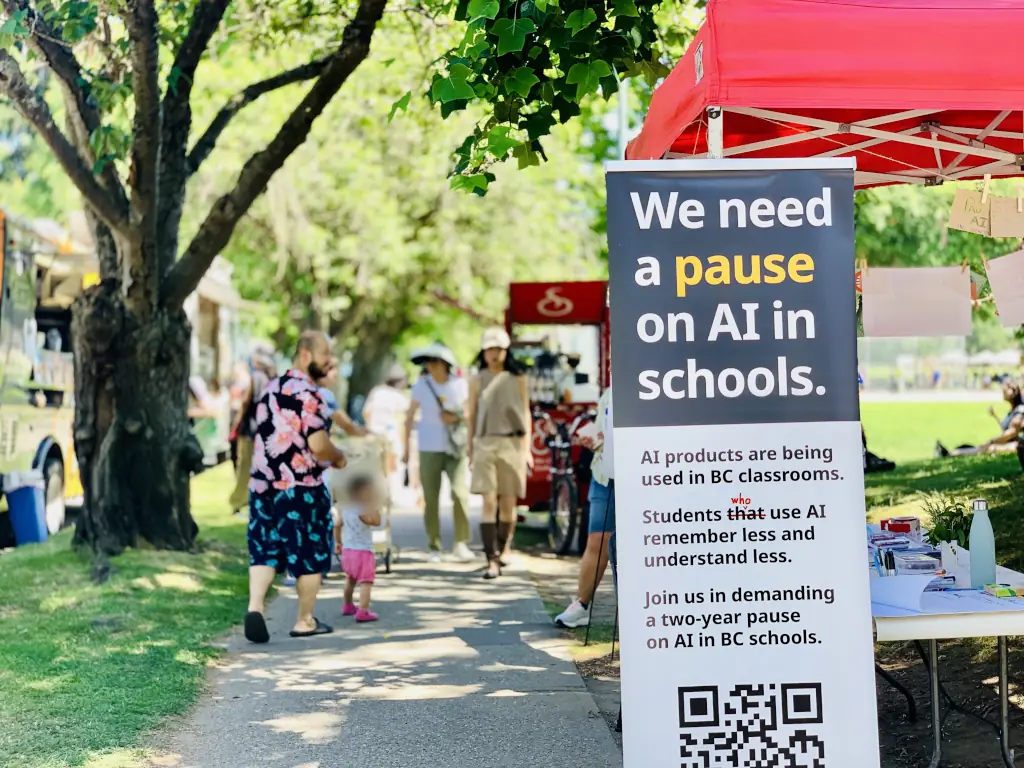
We had our second pop-up stand at the Kitsilano Farmers' market this weekend, following the first pop-up at Riley Park Farmers' market in May.
If you were there, thank you for your support! Also a warm thanks to Stop Microsoft Copilot for stopping by and staying to help out.
If you like numbers, here is a quick recap of what happened:
- Talked to 300+ neighbours
- 28 cards were written to the Minister of Education by community members
- Top community concerns around AI use in schools are the loss of critical thinking, misinformation, causing addiction and environmental harms
Just like at Riley Park, we talked to a wide range of people including high-school and university students, seniors, teachers, university professors, small business owners, tech workers, psychologists, librarians, politicians, and even VSB employees.
From the many conversations and the letters that were written, a common thread emerged - the need to protect children’s critical thinking.
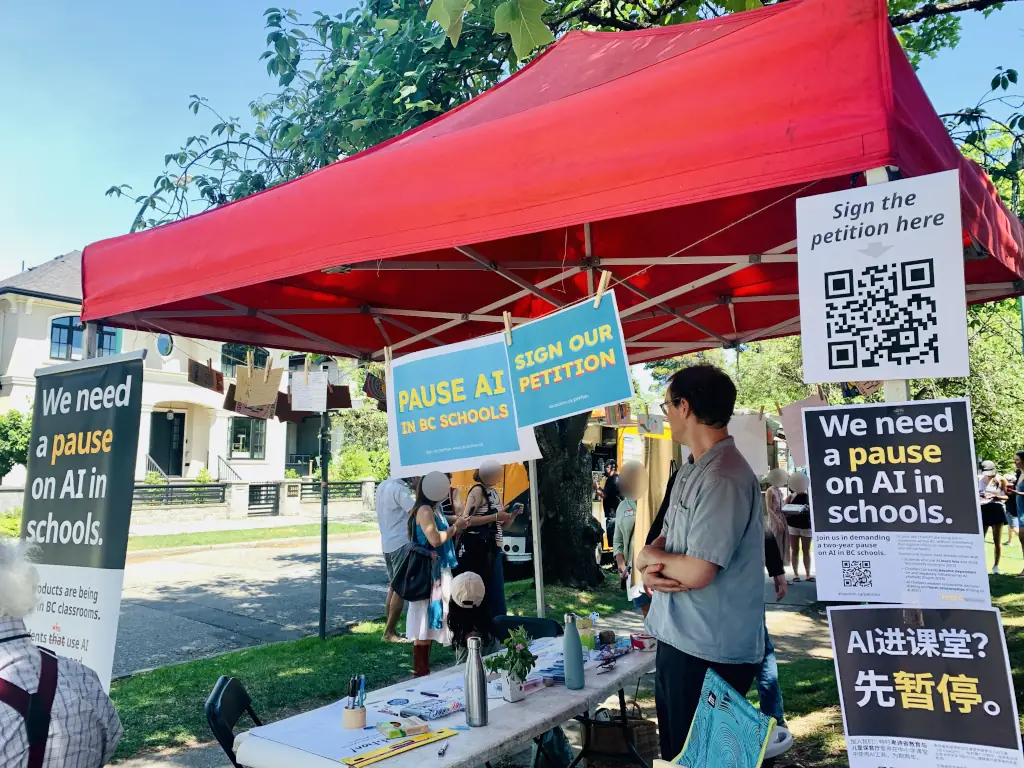
We were allocated a great spot right by the entrance to the market. 300 people stopped by to chat.
What really stood out to us:
- A high-school teacher shared that they are "being asked" to use AI for grading
- A VSB elementary school Principal stopped by to learn more about PACES concerns
- A retired federal government librarian told us about a team of librarians who got let go after training a poorly-functioning AI tool that replaced them
- A first-year engineering student told us they are not using AI, as they want to learn. But their peers are using it and they do better during the term; however, when it comes to exam time, the peers who used AI do poorly, compared to them
- A psychologist who works with youth shared that they are already seeing impacts of AI use on young people’s sense of capability and productivity, affecting their mood, anxiety, and hope for the future
- A university professor lamenting the loss of critical thinking skills in students
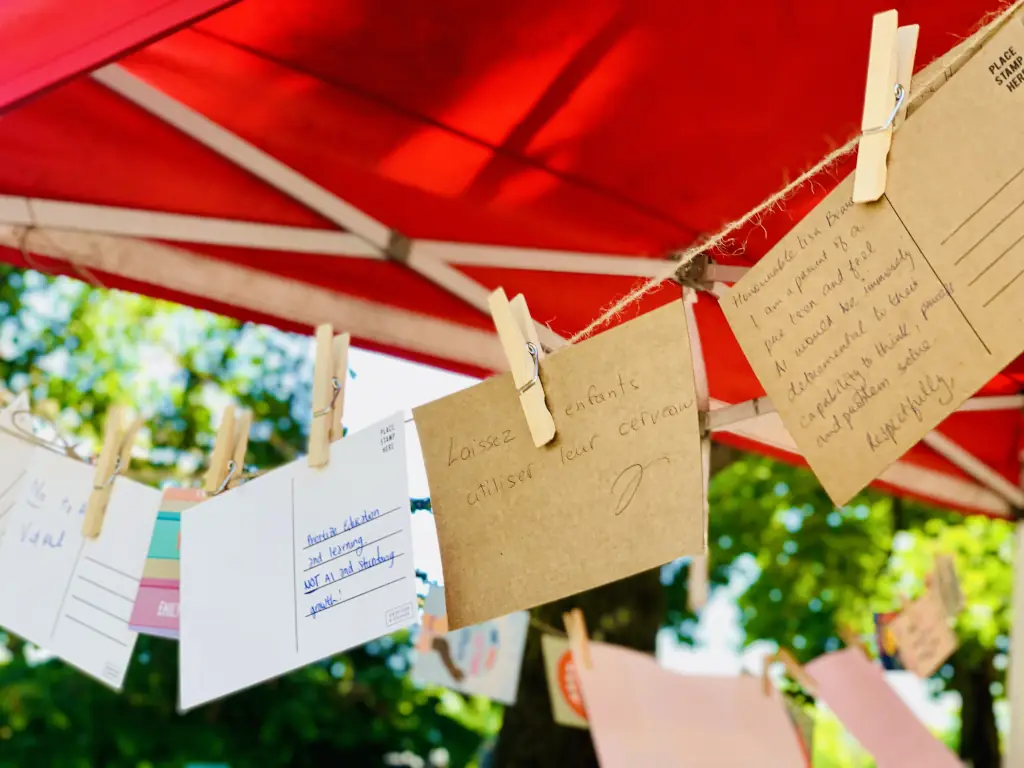
So many people took the time to write postcards to the Ministry of Education.
Aside from conversations, we had a few engagement opportunities where folks could write down their thoughts and vote on concerns related to AI and education.
When we counted up all the dots, we got the following picture, starting with most concerns expressed:
- Brain development / critical thinking - 55 dots
- Misinformation / bias - 32 dots
- Environmental impacts - 30 dots
- Addiction / loss of agency - 30 dots
- Peer and teacher relationships - 25 dots
- Big Tech control - 24 dots
- Surveillance / privacy - 24 dots
- Mental health impacts - 22 dots
- Job security - 12 dots
- Other - 2
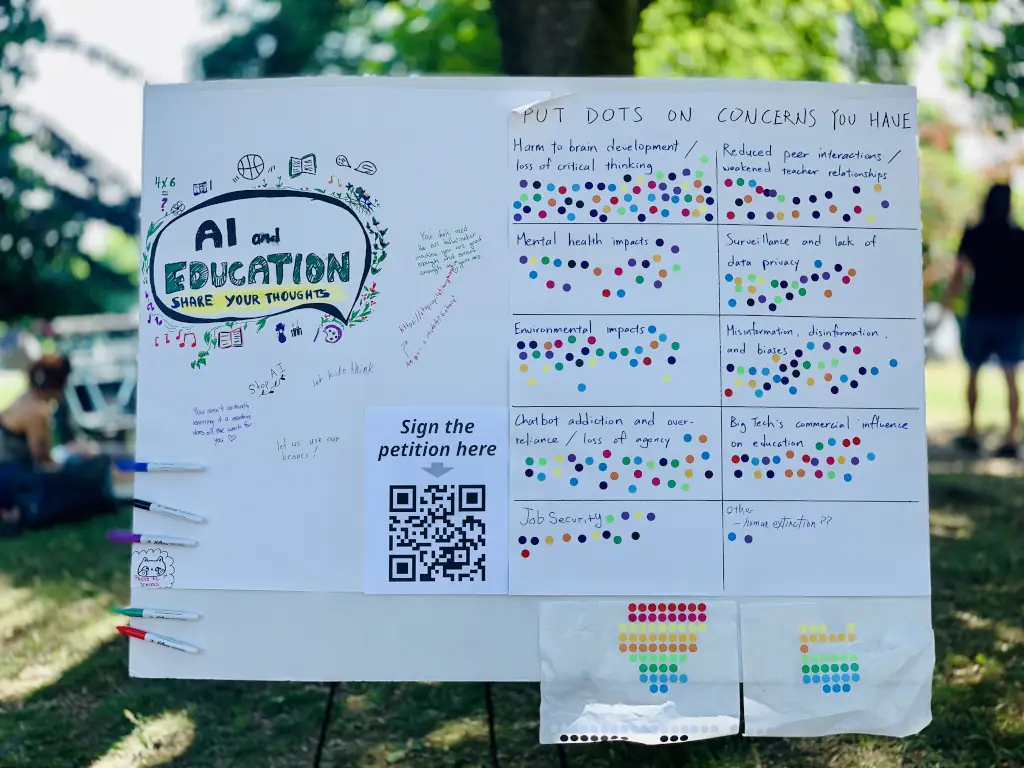
We asked people to put stickers on the subjects that concerned them most about AI in education.
In reflecting back on the day, here are our takeaways:
- Many people did not know about AI use in schools and were surprised
- Folks felt inspired to see grassroots actions such as this one making a difference
- Many folks who use AI, were nonetheless critical or concerned about its use in education
- And our “Paws on AI” pins and origami were once again a success (I mean, who can resist cats 😹)
It is clear that people want to have conversations about AI, regardless of what they think about it, and many thanked us for creating space for this.
While we take a pause from the markets, we will continue to push for the Pause on AI in Schools - as we know it matters to more than a 1000 of you who have signed our petition.
We have many ways in which you can get involved, big or small, join our Zulip group or email contact@aicaution.ca to find out how you can help.